Strategy Tools
Strategy Tools for keyword, competitor, and audience research
Find the keywords your customers search, see which domains compete with you in search and in ads, define the personas every writing tool writes for, and audit your own website. The findings brief your campaigns and content.
Keyword research
Competitor research
Personas and site audit
You write content without knowing what to target.
Most small businesses publish on whatever feels right that week. The result: posts no one searches for, ads in the wrong category, and a website you cannot tell is broken.
Writing blog posts and ads on guesses about what customers search.
Not knowing which competitors are taking the same audience as you.
Paying for SEO tools you only use a couple of times a quarter.
See the four research tools that decide where to focus →
Why a research stack belongs inside your customer platform
Three research tools and a website audit, feeding the same content, ads, and campaigns you build in Craftify.
Three keyword research types
Run keyword research three ways to find the terms your customers search for a service, then hand the keywords to the blog writer, the ad writer, or a campaign.
Real competitors, not guesses
Enter a domain and get its SEO competitors and its PPC competitors: who ranks for the same searches, and who bids on the same ads.
Personas and a site audit
Segment your audience into personas, and every writing tool in Craftify writes for them. Run a website audit report for performance and stats, so the work has a baseline.
Four research tools, one workspace
Keyword research, competitor research, audience segmentation, and a website audit report. Each one feeds the campaigns and content you build in Craftify.
What it does
Research that briefs the work
Saved research, the topics it turns into, and the campaigns it feeds.
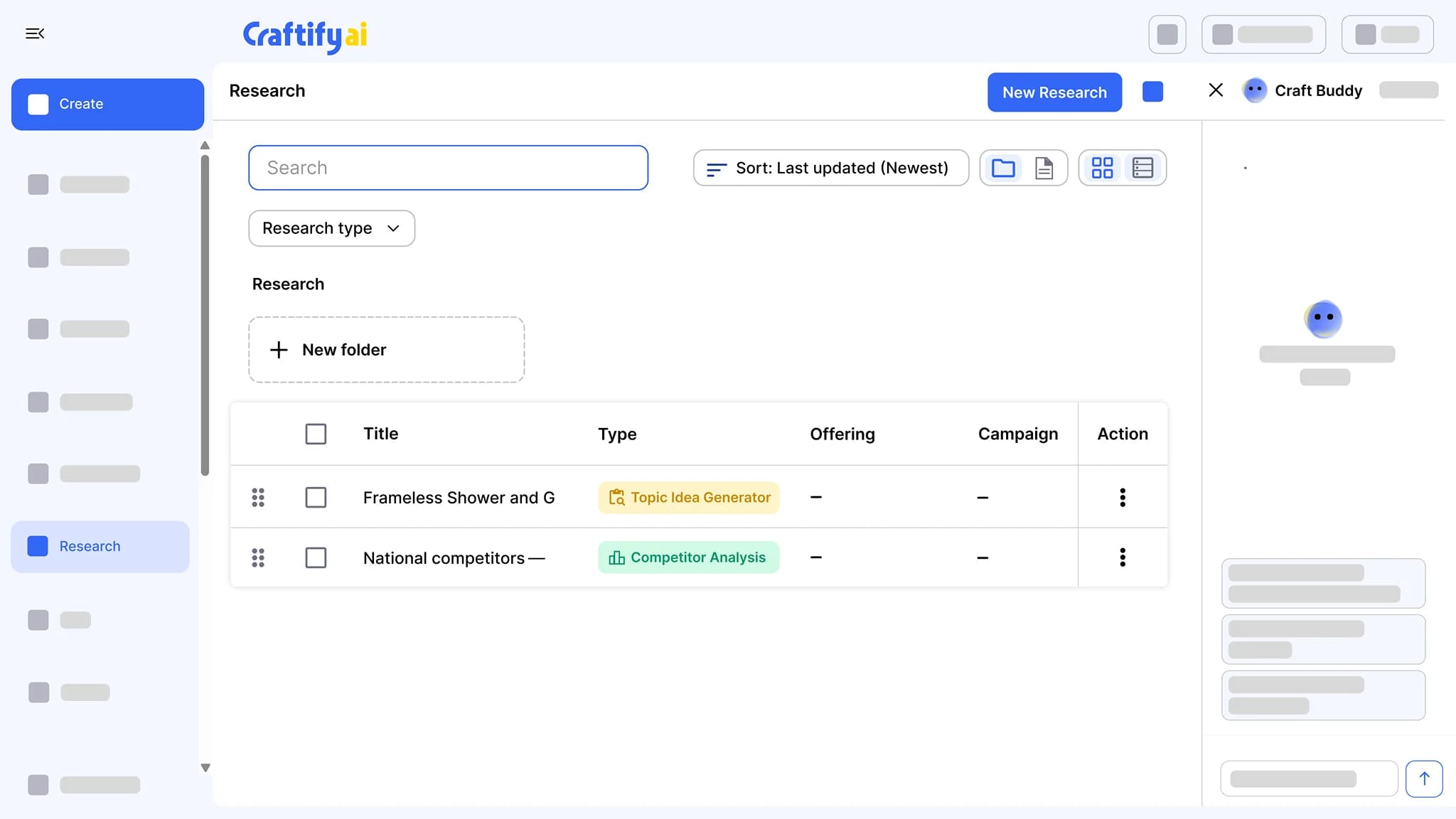
Keyword research, competitor research, audience personas, and a website audit, saved in folders next to the campaigns and content they brief.
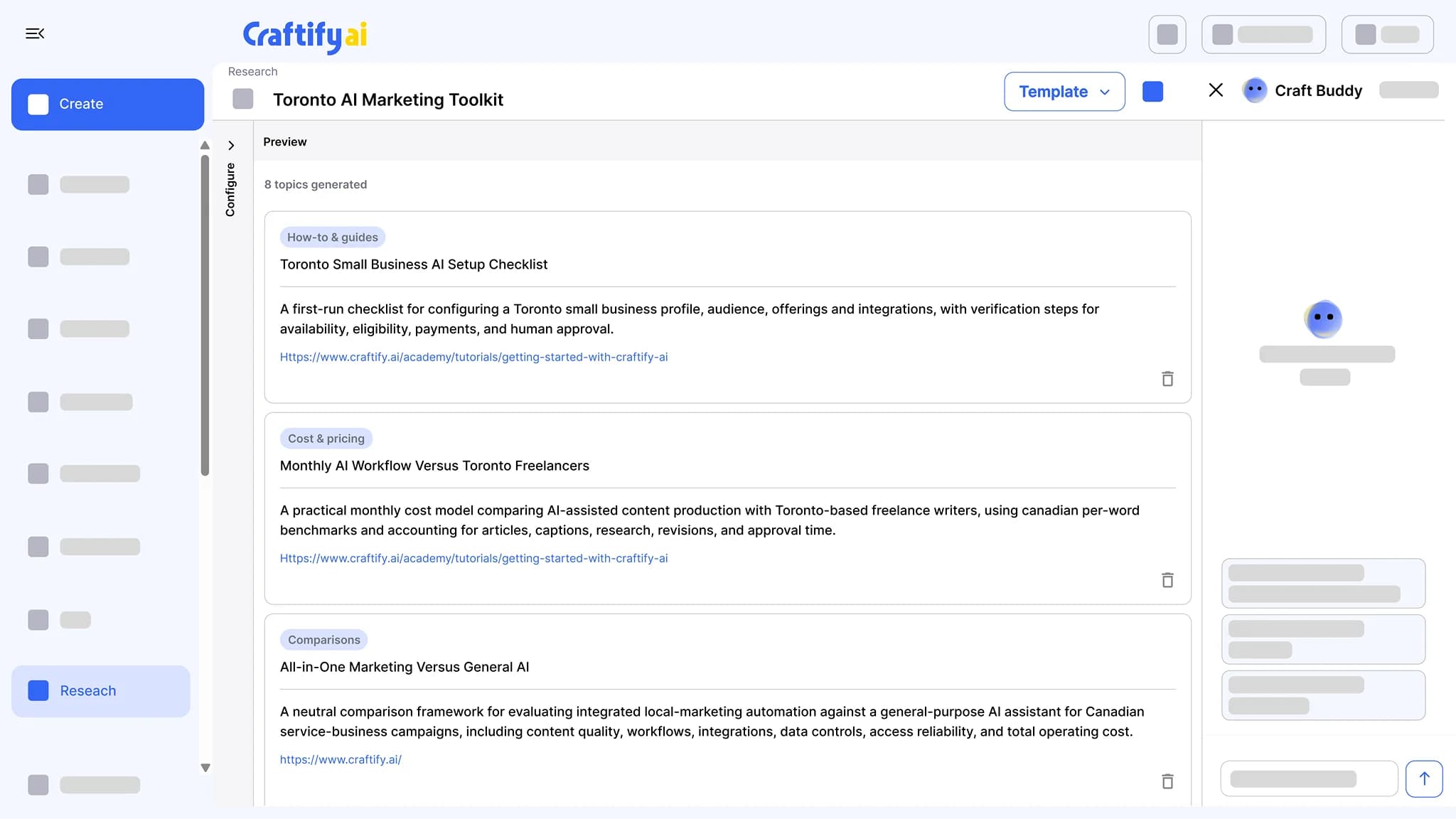
Enter a keyword or a service and get a list of topic ideas, each with its angle. Hand a topic to the blog or social post writer to fill the month.
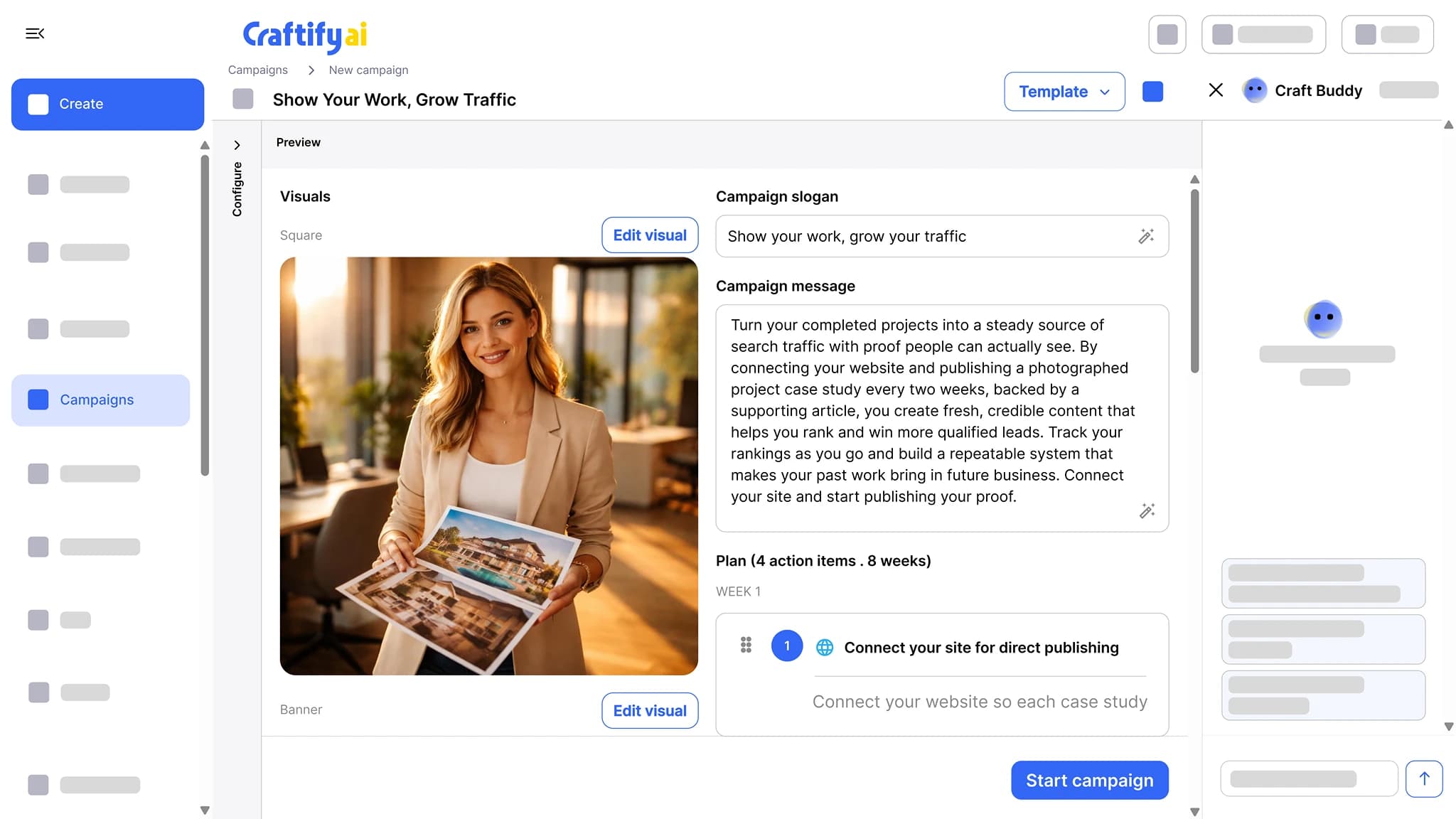
See topic researchPick a goal, and Craftify drafts the slogan, the message, the visuals, and a week-by-week plan of action items. Each item becomes a post, an email, or an article you approve.
See campaigns
Want a walkthrough on a specific niche? Book a demo with our team.
How it works
Pick the tool, get the data, use it in the rest of Craftify.
1
Pick the research tool
Keyword research, competitor research, audience segmentation, or website audit report.
2
Run the report
Enter a domain, a keyword, or a description of your customers. You get keywords, competitor domains, persona definitions, or an audit of your site.
3
Use it elsewhere in Craftify
Pull keywords into a blog post or an ad. Personas shape every writing tool. The audit tells you what your website needs fixed. The findings brief the campaigns and content you build next.
Ready to write content people actually search for?
Frequently asked questions
Strategy Tools is the research set in Craftify AI: competitor research, keyword research, audience segmentation into personas, and a website audit report. What you find there briefs the campaigns and content you build in the rest of the platform.
Competitor Research finds the SEO and PPC competitors of a domain. Keyword Research offers three research types. Audience Segmentation defines personas used across every writing tool. Website Audit Report gives performance and stats for a website.
The output goes into the rest of Craftify. A keyword from research goes into a blog post or an ad, a persona shapes every writing tool, and the findings brief your campaigns. The work does not end in a report.
Personas describe who you are writing for. Once defined in Audience Segmentation, every writing tool in Craftify writes with them in mind, from social posts to emails to blog articles. They are different from contact segments, which are live lists of real contacts in your CRM.
Performance and stats for the website you enter. Run it on your own site to get a baseline before you start publishing.
Yes. Competitor Research returns both: the SEO competitors that rank for the same searches as a domain, and the PPC competitors that bid against it.