The Digital Marketing Revolution: Navigating the Online Marketing Landscape
- What digital marketing actually includes
- SEO is the slow work that keeps paying off
- PPC gives you speed, control, and fast feedback
- SEO vs PPC is the wrong argument
- Your website is still the conversion hub
- Content marketing builds trust before the sale
- Social media works when you stop treating every platform the same
- Email is still one of the most reliable channels you own
- Affiliate marketing can extend your reach, if the fit is real
- The real win comes from channel synergy
- What to measure so you do not guess
- A smarter way to approach digital marketing
Digital marketing used to feel optional for a lot of small businesses. A nice extra. Something to “get to later” after the real work was done.
That’s over.
For most businesses now, your online presence is not a side project. It is where people discover you, compare you, judge whether you’re credible, and decide if they want to buy. Even when the final sale happens in person, over the phone, or through a quote request, the path usually starts online.
That shift has changed the job of marketing. It is no longer about picking one channel and hoping it works. It is about building a connected system. Your website, search visibility, ads, content creation, email, and social media all affect each other. When they work together, growth gets steadier. When they don’t, marketing starts to feel like a string of random activities that eat time and money.
If you run a small business, that difference matters. You do not have endless budget, endless staff, or endless patience. You need marketing that is efficient, measurable, and realistic.
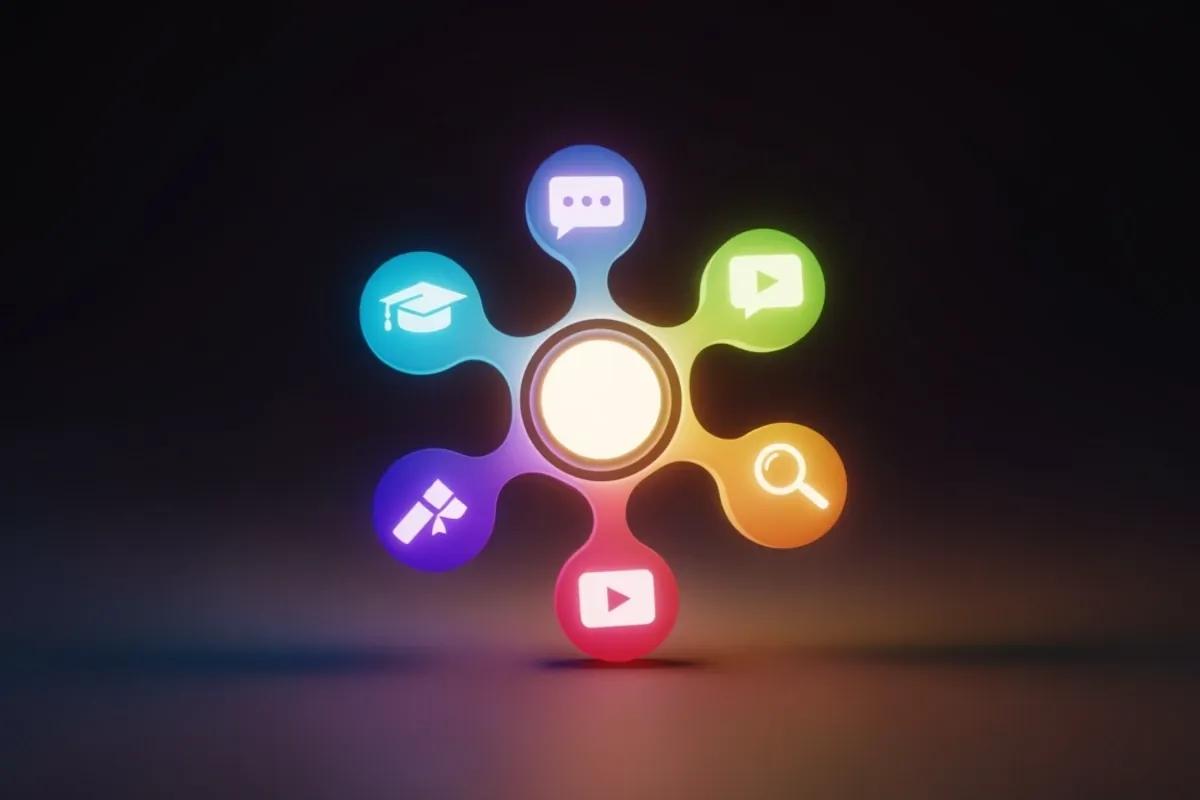
What digital marketing actually includes
Digital marketing is the collection of online methods businesses use to attract attention, turn visitors into leads or customers, and keep those customers engaged over time.
That includes search engine optimization, paid advertising, website marketing, content marketing, social media, email, and affiliate partnerships. People often talk about these as separate disciplines, and technically they are. In practice, they work best when they are connected.
Think of it this way. SEO helps people find you through search. PPC helps you appear quickly for the terms you want to target right now. Your website gives those visitors somewhere useful to land. Content answers questions and builds trust. Social media keeps your business visible and familiar. Email helps you stay in touch after the first interaction. Affiliate marketing can extend your reach through people who already have an audience.
No single channel does the whole job. That is the part many businesses learn the hard way.
SEO is the slow work that keeps paying off
Search engine optimization still matters because people still search with intent. They type in exactly what they want, often when they are ready to take action. If your business shows up at the right moment, you are not interrupting anyone. You are meeting demand.
That is why SEO remains one of the strongest long-term plays in digital marketing.
At its core, SEO is about helping search engines understand your website and trust that your pages are useful for real people. That means using relevant keywords in natural ways, writing accurate page titles and meta descriptions, publishing content that answers actual questions, and earning links from credible sites. It also means fixing technical issues that make your site hard to crawl or slow to load.
For small businesses, SEO does not have to start with a giant strategy document. Start with the obvious. What would a customer type into Google to find your service? Which pages on your site actually deserve to rank? Are those pages clear, useful, and specific? Do they load quickly on mobile? Do they answer the question without making people work for it?
SEO is slower than paid ads, and that frustrates people. Fair enough. But the upside is real. A well-ranked page can bring qualified traffic for months or years without charging you for every click. That kind of compounding is hard to ignore.
PPC gives you speed, control, and fast feedback
If SEO is the long game, pay-per-click advertising is the short game that can start tomorrow.
PPC lets you appear in front of people right away by paying for placement on search engines, social platforms, or display networks. You set targeting rules, write the ad, choose where it goes, and pay when someone clicks.
The obvious benefit is speed. You do not have to wait for rankings. You can test offers, launch promotions, validate keywords, and drive traffic to a new service page immediately. For a small business with something timely to promote, that matters a lot.
PPC also gives you cleaner feedback than many other channels. You can test two headlines, two landing pages, or two audience segments and see what happens. That makes it useful beyond lead generation. It is also a research tool.
But paid traffic has a downside that everyone discovers quickly. The minute you stop paying, the traffic slows or disappears. That is why PPC should not be your whole plan unless you are comfortable renting your visibility forever.
It works best when it fills a gap. Maybe your SEO is still maturing. Maybe you want fast demand for a seasonal campaign. Maybe you have a high-margin service where paid acquisition makes financial sense. Those are good reasons to use it.
SEO vs PPC is the wrong argument
A lot of articles frame this as a competition. SEO versus PPC. Which one is better?
That question sounds tidy, but real businesses usually need both, just in different proportions.
SEO is usually better for long-term traffic, authority, and lower acquisition costs over time. PPC is better for speed, testing, and high-intent campaigns that need immediate visibility. One builds an asset. The other buys access.
Here’s a simple way to think about it. If you need leads this month, PPC can help. If you want a stronger pipeline six months from now, SEO has to be part of the plan. If you can do both, even modestly, they become more useful together. PPC data can show which keywords convert, and that can inform your SEO content. SEO can reduce pressure on your ad budget by bringing in organic traffic over time.
This is where a lot of small businesses get unstuck. They stop looking for one perfect channel and start building a more balanced system.
Your website is still the conversion hub
It is easy to obsess over traffic and forget the obvious question: what happens after people arrive?
Your website is where digital marketing either turns into business or falls apart. You can run ads, publish content, and post on social media all day, but if your site is confusing, slow, or vague, results will disappoint.
A good business website does not need to be flashy. It needs to be clear. Visitors should understand what you offer, who it is for, why they should trust you, and what to do next. If that takes more than a few seconds, your site needs work.
Mobile experience matters even more than many owners think. People browse while commuting, waiting in line, or comparing options from the couch. If your site loads slowly, hides important information, or makes forms painful on a phone, you lose people before they ever speak to you.
Good website marketing is really about reducing friction. Use plain language. Keep navigation simple. Put calls to action where people can find them. Make forms short unless there is a real reason they need to be long. Show proof, like testimonials, certifications, photos, or results, where relevant.
This is also a good place to use small business tools wisely. Heatmaps, analytics, form tracking, and user session recordings can reveal where visitors get stuck. Sometimes the fix is not dramatic. A rewritten headline, a better button label, or a faster page can change a lot.
Content marketing builds trust before the sale
Content marketing works because people like to feel informed before they buy. That sounds obvious, but many businesses still create content as if the goal is to fill space rather than help someone.
Useful content answers questions, removes doubt, and makes your business easier to understand. It can take the form of blog posts, videos, email sequences, short social clips, podcasts, or visual explainers. The format matters less than the usefulness.
For small businesses, the best content often starts with repeat customer questions. What do people ask on calls? What do they worry about before buying? What myths keep coming up? Those questions are content ideas sitting right in front of you.
This is also where AI marketing has become genuinely practical. Used well, AI can speed up research, help organize ideas, suggest outlines, repurpose material across formats, and support faster content creation. That can be a huge help for lean teams. But there is a catch, and it is an important one. If you publish generic AI copy without judgment, it sounds generic. Fast content is not the same as good content.
The better approach is to use AI as an assistant, not a substitute. Let it help you draft, structure, summarize, and brainstorm. Then add the parts only you know: your customer language, your examples, your opinion, your experience. Tools with features often described as a Smart Editor can help clean up structure and readability, but the final content still needs a human point of view. The same goes for AI assistants that act like a writing partner, or what some teams casually call a Craft Buddy. Helpful? Sure. Capable of knowing your customers better than you do? No.
Social media works when you stop treating every platform the same
A lot of social media advice is too simple. “Just post consistently” is not wrong, but it leaves out the hard part: what should you post, where, and why?
Different platforms attract different behavior. A polished visual post might work on one platform and disappear on another. A quick educational video can outperform a carefully designed graphic. A direct sales message might flop where a behind-the-scenes story earns attention.
The easiest mistake is cross-posting the exact same content everywhere and expecting the same response. Social platforms are different rooms with different norms. You do not walk into a networking event, a family barbecue, and a trade conference speaking in the same way.
For small businesses, social media is usually best used to stay visible, build familiarity, and create reasons for people to remember you. It can support direct conversions, but it is often stronger as a trust and attention channel than as a standalone sales machine.
Metrics help here, but only if you pick the right ones. Follower count can flatter you without telling you much. Pay more attention to saves, clicks, replies, comments with substance, and traffic to your site. Those signals say more about interest.
Email is still one of the most reliable channels you own
Email does not get the same hype as newer channels, but hype is not the same as value. Email remains one of the most dependable ways to nurture leads and bring past customers back.
Why? Because it is direct. You are not waiting for a platform algorithm to decide whether your audience sees your message. You can segment people based on what they asked for, bought, clicked, or ignored. That gives you room to be more relevant, and relevance is what makes email work.
The mistake is sending the same message to everyone. A new lead should not get the same email as a repeat customer. Someone who downloaded a guide should not get the same sequence as someone who abandoned a cart or requested a quote.
Segmentation sounds technical, but the idea is simple. Send messages that fit the person’s stage and intent. That can mean welcome emails, educational follow-ups, reminders, offers, or re-engagement campaigns. The more naturally your email reflects what the recipient actually cares about, the better it performs.
Email also gets stronger when tied to other channels. A blog post becomes an email topic. A paid ad can collect subscribers. A website form can trigger a follow-up sequence. This is what people mean when they talk about integrated marketing, and honestly, it is less glamorous than it sounds. It is mostly about making sure one action leads smoothly to the next.
Affiliate marketing can extend your reach, if the fit is real
Affiliate marketing is sometimes overlooked by smaller businesses, partly because it sounds like something only large ecommerce brands use. But the basic model is simple. A partner promotes your offer, and you pay them when their referral produces a sale or lead, depending on your setup.
That performance-based structure can be appealing because it limits upfront risk. You are not paying for vague exposure. You are paying for results.
Still, affiliate marketing is not automatic. The quality of the partner matters more than the number of partners. A smaller creator or niche publisher with a loyal audience is often more valuable than someone with bigger reach but weaker trust. If the recommendation feels forced, people notice.
This channel works best when your offer is easy to understand, the economics make sense, and you can track results clearly. It also requires brand judgment. You are letting someone else speak about your business, so the relationship has to make sense for both sides.
The real win comes from channel synergy
The strongest digital marketing plans are not built on one perfect tactic. They are built on coordination.
Imagine a local service business launching a new seasonal offer. They publish an SEO-friendly service page and a helpful blog post answering common questions. They run a PPC campaign to capture immediate search demand while the page builds organic traction. They share short social posts that point to the blog and service page. Website visitors who do not convert immediately are invited to join an email list for helpful tips or a quote reminder. Past customers receive a segmented email about the offer. If the business works with a trusted local creator or referral partner, that person shares the promotion with their audience.
That is not flashy marketing. It is just connected marketing. And connected marketing usually works better than isolated effort.
What to measure so you do not guess
One final point, because this is where good intentions often break down: if you are not measuring, you are mostly guessing.
That does not mean you need a complicated reporting stack. But you do need to know where leads come from, which pages convert, which emails get opened and clicked, which ads waste money, and which content attracts the right people.
Look at traffic quality, not just traffic volume. Look at conversion rate, not just impressions. Look at cost per lead, bounce rate, time on page, and return visits. Those numbers will not tell you everything, but they will tell you more than instinct alone.
And if you are using AI marketing systems or other small business tools to speed up execution, measurement becomes even more important. Faster output is only helpful if it leads to better results.
A smarter way to approach digital marketing
Digital marketing is not one trick. It is a set of connected decisions.
SEO builds visibility over time. PPC creates immediate reach and fast testing. Your website turns interest into action. Content builds trust. Social media keeps your business familiar. Email deepens relationships. Affiliate partnerships can expand your reach when the fit is right.
If that sounds like a lot, it is. I think that is the honest answer. But it does not mean you need to do everything at once. It means you should stop treating marketing like a pile of disconnected tasks and start treating it like a system.
For small businesses, that shift is often the difference between “we tried marketing” and “we built something that keeps working.”
And that is really the goal. Not more noise. Better connection. Better timing. Better follow-through.

