Local Service SEO in 2026: What Actually Matters
- How local search works today
- Google Business Profile is still the center of gravity
- On-site local SEO still wins or loses on page quality
- Reviews are both a ranking signal and a trust signal
- Citations still matter, but clean data matters more than volume
- If you can’t measure leads, you’re guessing
- Common local SEO mistakes that keep showing up
- The short version
Local SEO has a funny reputation. People either treat it like a dark art or assume it’s just “set up your Google profile and hope.” Neither view is very useful.
For local service businesses in 2026, the basics still do most of the work. Be clear about what you do, where you do it, and why someone should trust you. Then make it easy for Google and real people to confirm that story. That’s the job.
The tactics have changed around the edges. Mobile behavior is even more dominant. Google Business Profile carries a lot of weight. Reviews move faster than they used to. AI marketing and content creation tools can speed up the work, but they also make it easier to publish generic junk at scale. That part worries me a little, because local search is still stubbornly human. A decent profile and a believable website beat a pile of vague pages every time.
Here’s what matters now.
How local search works today
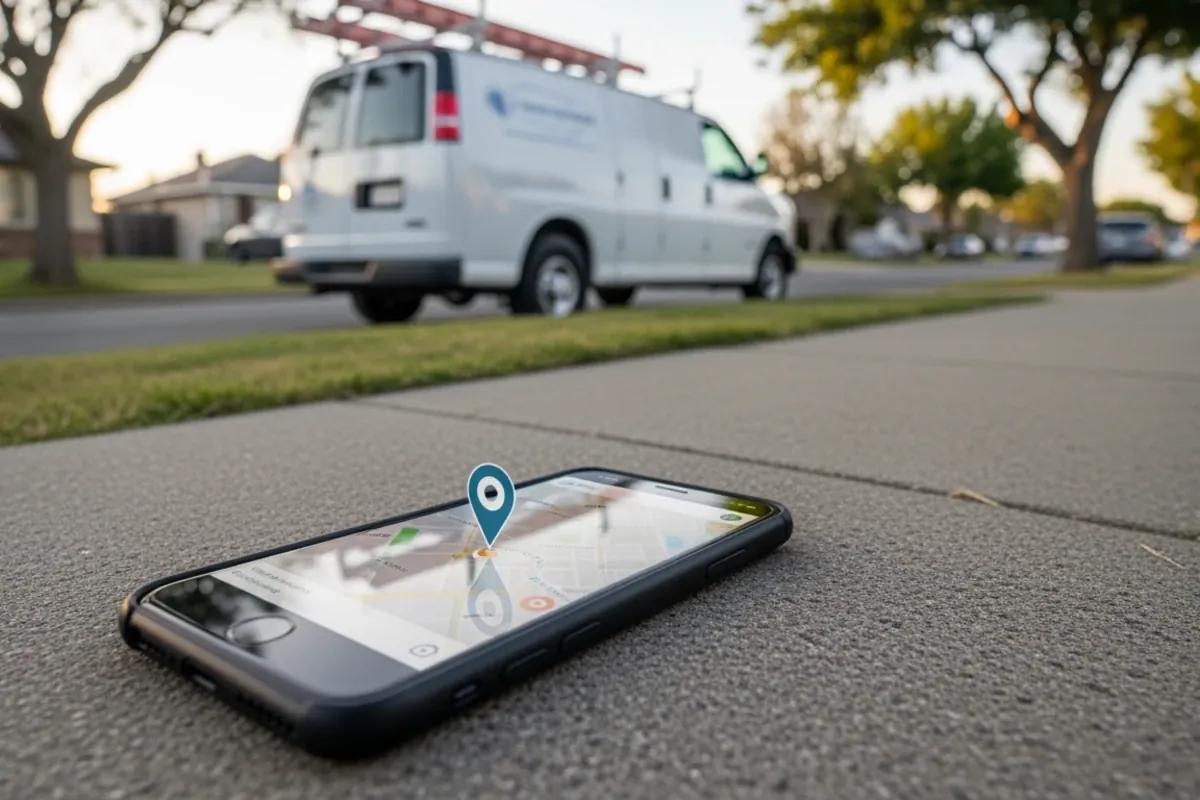
Local search results are shaped by three basic ideas: relevance, proximity, and reputation. Google wants to show a business that matches the query, is reasonably close to the searcher, and looks trustworthy.
That works a little differently depending on your business model.
A storefront business has a public location where customers come to you. A salon, clinic, or repair shop fits this model. A service-area business goes to the customer instead. Think plumbers, cleaners, mobile pet groomers, and electricians. This matters because Google treats these setups differently, especially in Google Business Profile. If you don’t actually serve customers at your address during stated hours, pretending to be a storefront is a bad move. It can create ranking problems and policy issues later.
You also need to understand the split between the Local Pack and organic results.
The Local Pack is the map section, usually a set of business listings with reviews, hours, and click-to-call options. It tends to capture a lot of attention, especially on phones. Organic results sit below that and often include service pages, location pages, directories, and sometimes local news or forum threads. Winning local search usually means working both areas. A strong Google Business Profile can help you show in the map results. A useful website helps you rank organically and convert the traffic you earn.
“Near me” behavior is more subtle now than it used to be. People still type “near me,” but Google often infers local intent without the phrase. A person searching “water heater repair” on a phone at 7:30 a.m. is probably looking for someone nearby, right now. That means your mobile experience matters a lot. If your site loads slowly, hides the phone number, or forces people through a clunky form, you’re making a simple decision harder than it should be.
Local SEO in 2026 is heavily mobile-first in practice, not just in theory. People tap. They call. They compare reviews quickly. They don’t study your homepage for five minutes.
Google Business Profile is still the center of gravity
If I had to name the most important local asset for many service businesses, it would still be Google Business Profile. Not because it does everything, but because it often creates the first impression and the fastest conversion path.
The category choice matters more than many owners realize. Your primary category should describe the main service you want to rank for, not a broad umbrella term that feels “safe.” If you’re mainly an emergency plumber, “Plumber” usually makes more sense than a vague business type that hides the service. Secondary categories help fill out the picture, but they should reflect real offerings, not wishful expansion.
The services section is worth completing carefully. Add your actual services, use plain language, and keep the descriptions useful. This is not the place for keyword stuffing. It’s the place for clarity.
Service areas often confuse people. Setting a wider service area does not magically make you rank in every city you add. Proximity still matters. Service areas help users understand where you work, and they help Google understand your operating footprint, but they are not a shortcut around distance. A plumber based in one suburb usually won’t outrank a solid competitor physically located in the next city just because they added twenty ZIP codes.
Hours, attributes, and booking links are simple details that affect real behavior. Accurate hours reduce frustration. Holiday hour updates prevent missed calls and angry reviews. Attributes can answer quick trust questions. Booking links help when the scheduling flow actually works. That last part matters. A broken booking experience is worse than no booking link at all.
Photos still help, mostly because people use them to judge legitimacy and professionalism. Show the team, vehicles, completed work, equipment, office or storefront if relevant, and before-and-after examples when appropriate. Keep them current. Don’t obsess over weird myths like hidden photo metadata changing rankings. A recent, believable photo library does more than technical superstition ever will.
Posts and updates are useful, though I wouldn’t pretend they’re a ranking cheat code. They can improve click-throughs and keep the profile looking active. Q&A is more important than many businesses think. Questions can appear there whether you manage them or not, so monitor it. If the same question keeps coming up, answer it clearly and early.
On-site local SEO still wins or loses on page quality
Your website gives Google the context your profile can’t fully provide. It also does the heavy lifting once someone clicks.
For local businesses, the two most important page types are service pages and location pages. They do different jobs.
A service page should explain one service well. A location page should explain where you offer that service and why that page matters to people in that area. When businesses mix these up, the result is usually thin, repetitive content.
A useful service page includes the problem you solve, how the service works, common situations, service options, FAQs, and a clear next step. A useful location page includes local proof: the city or neighborhood served, response expectations, reviews or testimonials from nearby customers when available, local photos, service notes that fit the area, and contact options built for mobile users.
Here’s the part many teams get wrong. If you publish thirty location pages that are basically the same paragraph with the city name swapped out, you’re not building local relevance. You’re building a mess. Google has seen this movie before. So have users.
AI marketing and content creation tools can help speed up drafting, especially for small business tools and lean teams. That’s fine. Smart workflow is not the problem. The problem is publishing pages with no real local detail, no useful information, and no reason to exist. If you use AI to help create local pages, someone still needs to add the reality: neighborhoods served, local testimonials, service constraints, travel expectations, permits or rules that matter locally, and the little details only the business actually knows.
NAP consistency still matters. Your business name, address, and phone number should match across your website, Google Business Profile, and major citations. Even small differences can create confusion. If you’re a service-area business that hides its address in Google, be thoughtful about how you present location details on your website and listings. The main goal is consistency and policy compliance, not trying to look bigger than you are.
Schema markup helps search engines interpret your business information. LocalBusiness schema is often appropriate, and Service schema can support key offerings. This won’t rescue a weak site, but it can reduce ambiguity. Think of schema as structured clarity, not magic dust.
Then there’s user experience. Page speed matters because local search visits are often urgent. People on phones are impatient. So am I, honestly. A slow contact form, giant image files, or pop-ups blocking the screen can kill conversions fast. Accessibility matters too. Clear headings, readable contrast, descriptive link text, alt text where it makes sense, and forms that are easy to complete help everyone. Good accessibility also tends to overlap with good usability, which is not a coincidence.
Reviews are both a ranking signal and a trust signal
Reviews do two jobs at once. They help search visibility, and they help people decide whether to contact you. The second job may be more important.
Review velocity matters. A steady flow of new reviews usually looks healthier than a burst followed by silence. Recency matters too. A business with strong recent feedback often feels safer than one with a perfect score built on old reviews. Sentiment matters, but not in a simplistic “5 stars only” way. Detailed reviews that mention the service, responsiveness, professionalism, or specific outcomes often carry more weight than short generic praise.
The best review strategy is boring, which is why it works. Ask consistently after the job is complete. Make the request simple. Use a short follow-up flow by text or email. Train staff to ask at the right moment, when the customer is relieved or happy, not two weeks later when the interaction is already fading.
Responding matters as well. Have a workflow. Decide who checks reviews, how often, what gets a standard response, and what must be escalated. Billing complaints, safety issues, discrimination claims, or anything with legal risk should not get a rushed public reply from the first person who sees it.
Negative reviews are uncomfortable, but they’re not always a disaster. Sometimes a calm, specific response does more for trust than a page full of perfect ratings. A good response acknowledges the issue, avoids defensiveness, and invites offline resolution. Something as simple as, “We’re sorry this was your experience. We’d like to review what happened and make it right. Please contact our office at…” is often enough.
If a review clearly breaks platform rules, such as impersonation, hate speech, or obvious spam, you can dispute it. Just be realistic. “I don’t like this review” is not the same as “this review violates policy.”
Citations still matter, but clean data matters more than volume
Citations are mentions of your business information on directories, platforms, and local websites. They aren’t as glamorous as reviews or as visible as your website, but they still help confirm that your business is real and consistent.
Start with core directories and the major local data sources relevant to your market. Then look at industry-specific listings. A home services company, legal practice, medical office, or contractor may each have niche directories that matter more than a random general directory.
The old habit of submitting to every directory under the sun is mostly a waste of time. Quality beats quantity here. What you want is accurate coverage, not noisy duplication.
Duplicate suppression matters more than people think. Old addresses, old phone numbers, duplicate profiles, and inconsistent business names can split signals and confuse customers. Run periodic checks. Clean up obvious conflicts. If you moved offices or changed call tracking setups, this is where problems tend to show up.
Local backlinks are another form of authority, and they’re often more useful than low-value directory links. Good local links can come from chambers of commerce, trade associations, neighborhood business groups, supplier pages, partner sites, community sponsorships, and local media mentions. These links work because they are believable. They connect your business to a real place and a real network.
If you can’t measure leads, you’re guessing
This part gets skipped a lot, which is wild to me, because ranking without measurement turns into theater pretty quickly.
Track the actions that lead to revenue. For most local service businesses, that means phone calls, form fills, and booking completions. If calls matter, call tracking can help, but set it up carefully so your primary business number remains consistent where search engines expect it. Dynamic number insertion on the website can work well when implemented properly.
Google Business Profile traffic should use UTM tags on key links, especially the website link and booking link. Without UTMs, a lot of GBP traffic gets lumped into direct or general organic traffic, and you lose visibility. That makes reporting muddy and decision-making worse.
Rank tracking also needs local context. A single average rank number for a whole metro area can be misleading. Local rankings vary by searcher location, sometimes a lot. Grid-based tracking by neighborhood or ZIP code is usually more honest.
Lead attribution does not need to be fancy at first, but it does need to exist. Capture the source when possible. Ask callers how they found you if the source isn’t obvious. Connect leads to booked jobs and revenue, not just inquiries. A page that drives fewer leads but better jobs may be worth far more than a page that gets a pile of low-intent form fills.
For small teams, simple small business tools are usually enough if they’re used consistently. A complicated dashboard nobody trusts is worse than a simple spreadsheet and disciplined tagging.
Common local SEO mistakes that keep showing up
Some problems never really go away.
Keyword stuffing in the business name is still common. Yes, it can influence visibility in some cases. It also violates Google policy and creates a fragile asset. If your legal or real-world business name is one thing and your profile says something else stuffed with service keywords and city names, you’re taking a risk.
Thin location pages are another repeat offender. If every location page says basically the same thing, users notice. Search engines notice too. Publish fewer pages if that’s what it takes to make them useful.
The third big mistake is ignoring spam competitors. If a competitor is clearly using fake listings, fake locations, or policy-breaking names, document it and use the available reporting options. Start with factual evidence. Use edit suggestions where appropriate and formal reporting when needed. Don’t turn it into a personal feud. Just keep the record clean and professional.
The short version
Local service SEO in 2026 rewards businesses that are easy to verify and easy to contact.
Get the business model right. Build a complete Google Business Profile. Create service and location pages with real local detail. Keep your business data consistent. Ask for reviews steadily and respond like an adult. Clean up citations. Track calls, forms, and bookings so you know what’s working.
None of that is flashy. I think that’s why people keep looking for shortcuts.
The boring work still wins.

