How to Build a Seasonal Campaign Calendar for Trades and Spas
- Start with the seasonality of your category
- HVAC follows weather, but not perfectly
- Plumbing is driven by risk and inconvenience
- Electrical demand rises around safety, upgrades, and weather
- Spas and wellness businesses have emotional seasons
- Build one campaign framework, then reuse it all year
- Pick offer types that match the season
- Use education to reduce confusion, not just sell harder
- Map the lead capture flow before launching
- Plan in seasonal blocks, not random months
- Pre-season is where margin lives
- Peak season needs capacity planning, not just promotion
- Off-season is for retention, reactivation, and upsell
- Create the core assets once per campaign
- Use AI to move faster, but keep your voice intact
- Start with prompt templates, not blank pages
- Repurpose one campaign across channels
- Put guardrails in writing
- Add local hooks so campaigns feel timely, not generic
- Measure what matters, then run a debrief
- A calendar is really a decision-making tool
If you run marketing for a local service business, seasonality is not a side note. It is the job.
People do not think about HVAC tune-ups the same week they panic over a dead AC. They do not search for a plumber with the same urgency in July that they do during a hard freeze. Spa buyers act differently too. Gift-card demand spikes around holidays, then self-care messaging tends to land better in January and before big local events.
That is why a seasonal campaign calendar matters. It gives you a way to plan ahead, smooth out demand, and stop building every promotion at the last minute.
I also think it reduces a lot of avoidable stress. Teams usually know their busy seasons in a vague way. The problem is vague does not schedule technicians, fill appointment gaps, or tell your front desk what offer is going live next Tuesday.
Here’s a practical way to build a calendar that works for trades and wellness businesses without turning it into a giant spreadsheet nobody wants to open.
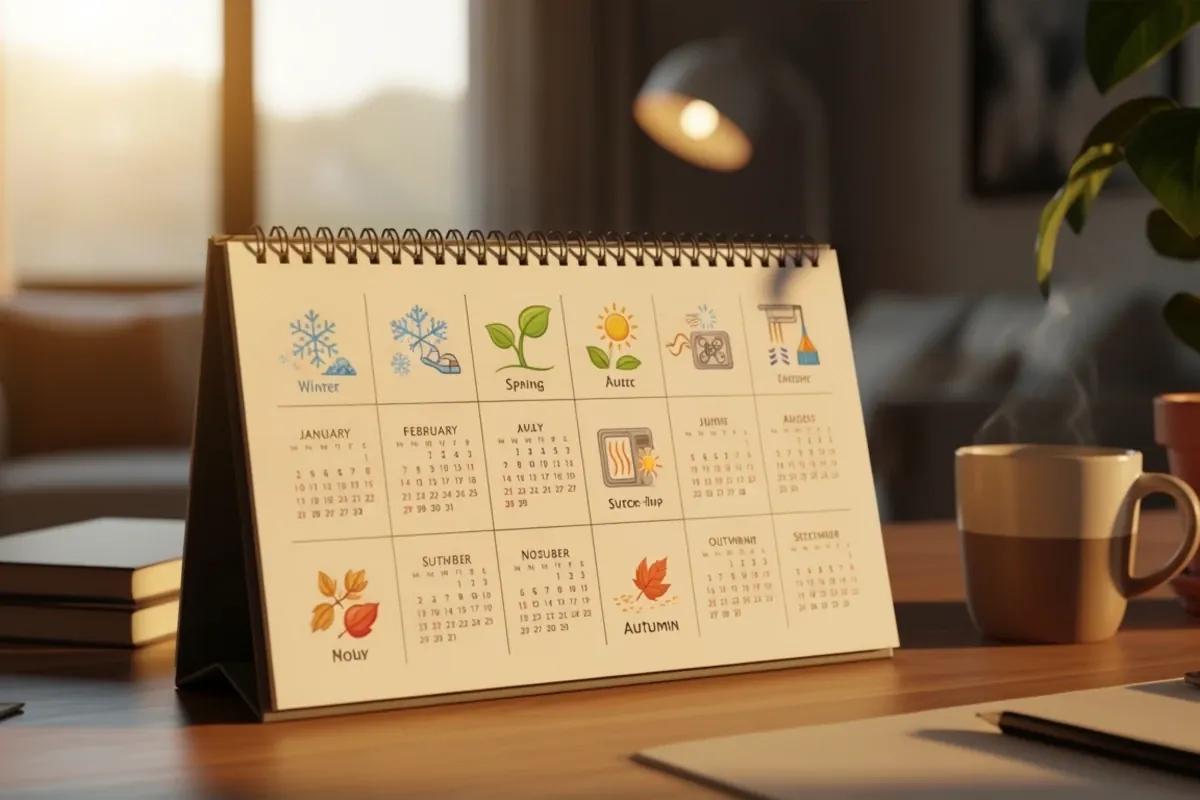
Start with the seasonality of your category
Before you write a single headline, map when demand naturally rises, dips, or changes shape.
HVAC follows weather, but not perfectly
HVAC businesses usually see strong demand around heating and cooling transitions. Spring is the obvious pre-AC window. Fall is the same for heating systems. Those are the months when tune-up campaigns make sense because customers are still able to plan.
Peak summer and peak winter are different. At that point, people often need repair, not education. Messaging has to reflect that reality. “Book your seasonal maintenance” works in April. It feels tone-deaf during a heat wave when someone’s house is 88 degrees.
The mistake I see a lot is marketing only during emergencies. That fills the board when demand is already there, but it does nothing to shape better jobs earlier, like maintenance plans, system replacements, or indoor air quality add-ons.
Plumbing is driven by risk and inconvenience
Plumbing seasonality can be dramatic. Freeze warnings create a short, urgent window for pipe protection content. Heavy rain may trigger sump pump messaging. Water heater replacements often cluster around cold months when aging units fail under stress.
This category responds well to educational campaigns because people are usually confused before they are convinced. A customer may not know whether a dripping water heater is an emergency, whether hard water is shortening appliance life, or whether a small leak can wait.
Good plumbing campaigns reduce fear without pretending there is no risk. That balance matters.
Electrical demand rises around safety, upgrades, and weather
Electrical campaigns often cluster around storm prep, backup power, panel upgrades, and newer home electrification needs like EV chargers.
This category also benefits from pre-season education. A homeowner may know they want an EV charger “eventually,” but not know whether their panel can handle it. That opens the door for assessment offers, upgrade consultations, and simple explainer content.
Storm season is its own thing. Once outages start, people move quickly. Before that, they are willing to compare options and think about budget.
Spas and wellness businesses have emotional seasons
Wellness does not follow weather in the same way trades do, but it is still seasonal. Holiday gifting matters. January self-care messaging matters. So do prom season, wedding season, Mother’s Day, Valentine’s Day, and local event calendars.
People also buy spa services in two very different mindsets. Sometimes it is gift-driven. Sometimes it is stress-driven. Those require different campaigns. One is about thoughtful gifting and convenience. The other is about routine, relief, and permission to prioritize yourself.
Once you know your category patterns, the calendar gets a lot easier. You are no longer asking, “What should we promote next month?” You are asking, “What do customers need right before this season hits?”
Build one campaign framework, then reuse it all year
A seasonal campaign calendar should not mean reinventing your process twelve times. Use the same framework each time, then swap the offer, timing, and message.
I like to keep each campaign anchored to four decisions.
- What problem is happening now, or about to happen?
- What offer fits that moment?
- What educational content removes hesitation?
- What path gets someone from interest to booking?
That’s it. Simple on purpose.
Pick offer types that match the season
Some offers work better at certain points in the year.
Tune-ups fit pre-season windows because people are trying to avoid problems. Bundles work well when you want to raise average ticket, like pairing HVAC maintenance with filter delivery or plumbing inspection with water heater flush service. Memberships are useful when you want to reduce one-and-done buyers and spread work more evenly across the year. Gift cards are obvious for spas, but they can also work for wellness packages or seasonal treatment promos.
The offer should feel like a solution, not a gimmick. If your audience has to stop and decode what you mean, the campaign gets weaker fast.
Use education to reduce confusion, not just sell harder
This is where a lot of small businesses leave money on the table.
People often delay booking because they do not understand what they need, what it costs, or what happens next. A campaign that answers those questions usually performs better than a campaign that keeps repeating “limited-time offer.”
For HVAC, explain the difference between repair and maintenance. For plumbing, explain what signs suggest a water heater is near failure. For electrical, explain when a panel upgrade becomes necessary. For spas, explain who a treatment is best for and how often people usually book it.
Useful education builds trust because it makes the next step feel smaller.
Map the lead capture flow before launching
I have mixed feelings about beautiful campaigns that lead to clunky booking. They look great in a meeting. Then they lose leads in real life.
Every campaign should have a clear destination. Maybe it is a landing page. Maybe it is a booking page. Maybe it is a call form for urgent service. The key is matching the flow to buyer intent.
A same-day plumbing issue should not force someone through three screens of nurturing. A gift-card buyer probably wants quick checkout. A high-ticket electrical upgrade may need a consultation request form with a few qualifying questions.
The campaign is not the ad or email. The campaign is the whole path.
Plan in seasonal blocks, not random months
Monthly calendars are useful, but quarter-based thinking is easier for most teams. It helps you see the runway before each busy period.
Pre-season is where margin lives
Pre-season windows are usually your best chance to shape demand instead of reacting to it.
For HVAC, that may mean spring cooling tune-ups and fall furnace check campaigns. For plumbing, freeze-prevention education should go out before the first hard temperature drop, not after. For electrical, generator and storm-prep campaigns should start before the severe weather forecast fills up. For spas, holiday gift campaigns need time to build, especially if you want corporate gifting or package sales.
Pre-season campaigns should start earlier than feels comfortable. That is normal. If you wait until everyone in your market feels the season, your competitors are already in front of them.
Peak season needs capacity planning, not just promotion
This is the part many marketers learn the hard way. More leads are not always better leads if the schedule is already packed.
During peak demand, watch lead volume against actual capacity. If you only have room for emergency calls, pause campaigns that push low-priority bookings. If your spa weekends are full, shift messaging toward weekday packages or future bookings.
A seasonal calendar should include throttle points. Decide in advance what happens if demand spikes. Will you change ad copy? Raise urgency on premium services? Push waitlist offers? Swap call-to-action language from “Book now” to “Request next available appointment”?
Marketing works better when operations are part of the plan.
Off-season is for retention, reactivation, and upsell
Off-season periods are not dead space. They are when you keep your list warm and bring past customers back.
Trades can use this time for memberships, inspections, indoor air quality upgrades, drain maintenance, water quality services, or panel assessments. Spas can use it for package offers, skin-care education, slower-day specials, and loyalty nudges.
The tone should change here. Off-season messaging does not need panic or countdown timers. It should feel helpful, relevant, and easy to act on.
Create the core assets once per campaign
You do not need twenty pieces of content to run a solid seasonal promotion. You need the right few, built to work together.
A basic campaign asset set usually includes:
- a landing page or booking page
- a short email and SMS sequence
- Google Business Profile posts
- a few short social videos
- before-and-after images, when appropriate and compliant
That mix covers most local businesses well.
The landing page should answer the obvious questions fast. What is the offer? Who is it for? Why now? What happens when I book? The email and SMS messages should support the same campaign, not introduce a whole new angle. Your Google Business Profile posts are easy to neglect, but they matter for local visibility, especially when people are already searching with intent.
Short video works best when it feels practical. Show a technician explaining what a tune-up includes. Show a spa provider walking through a seasonal package or common treatment question. Keep it plainspoken. Overproduced content can feel weirdly distant for local service marketing.
Repurposing helps a lot here. One campaign idea can become a page, a text message, two emails, three social posts, and a short FAQ video without feeling repetitive. This is where AI marketing tools can save serious time, especially if you are already juggling service ops, hiring, and reviews.
Use AI to move faster, but keep your voice intact
I like AI marketing for first drafts, pattern spotting, and production speed. I do not like it when every campaign starts sounding like it came from the same cheerful robot.
The fix is guardrails.
Start with prompt templates, not blank pages
If you use AI for content creation, build repeatable prompts for the pieces you create most often: headlines, FAQs, service descriptions, seasonal email copy, and short video scripts.
A good prompt includes the audience, service, season, offer, tone, and one important constraint. For example: write five headline options for a spring HVAC tune-up campaign aimed at homeowners who want to avoid emergency repairs; keep the tone calm and practical; do not make savings claims.
That last part matters. Claims, pricing, and compliance should not be improvised.
Whether you use a Smart Editor, a shared document, or one of the many small business tools now built around AI, the goal is the same. Save time on drafting so your team can spend more attention on accuracy and timing.
Repurpose one campaign across channels
This is where AI actually earns its keep.
Take one seasonal offer and turn it into a landing page, a text reminder, a 30-second video script, a few FAQ answers, and a Google post. You do not need five separate brainstorming sessions. You need one solid core message translated for each channel.
If your team has an internal helper, even something informally called a Craft Buddy, use it for versioning rather than decision-making. Let it rewrite for SMS length. Let it turn service notes into customer-friendly FAQ copy. Just do not let it invent pricing, guarantees, or technical advice that nobody reviewed.
Put guardrails in writing
Every team using AI should have a short rules list. Nothing fancy.
State what claims are off-limits. Define how pricing can be mentioned. Note which services need legal or compliance review. Require a human check for anything related to safety, financing, health outcomes, or local regulations.
That sounds boring. It is also what keeps a fast workflow from becoming a cleanup job.
Add local hooks so campaigns feel timely, not generic
Seasonality is stronger when it connects to real community context.
A storm-prep campaign feels more relevant when it references local weather patterns. A spa self-care campaign can tie into wedding season, graduation season, or a town festival weekend. Local businesses have an advantage here because they are not writing for everyone. They are writing for people nearby, with familiar routines and familiar problems.
Neighborhood events and sponsorships can give a campaign a natural reason to exist. Cross-promotions can work too, if the fit is real. A spa might partner with a salon, fitness studio, or bridal business. An electrical company doing EV charger installs might collaborate with a local auto-focused event. A plumbing business might support a winterization workshop at a neighborhood association meeting.
Charity drives and seasonal givebacks can also work well, but only when they are treated as actual community involvement, not camouflage for a sales push. People can tell the difference.
Measure what matters, then run a debrief
A seasonal campaign is only useful if you learn from it.
The first number people watch is lead volume. Fair enough. But lead volume without capacity context can be misleading. Fifty leads are not impressive if the team could only handle fifteen and the rest had a poor experience.
Look at booking rate too. How many leads turned into scheduled work? Then check average ticket. Did the campaign fill the board with low-value appointments, or did it drive the kind of work you wanted?
After the season ends, do a short debrief while the details are still fresh. Keep it practical:
What offer worked? What message got ignored? Which channel drove actual bookings? Did response time hurt conversions? Did operations have enough capacity? What should start earlier next year?
This is the part people skip because everyone is tired. I get it. But a 20-minute debrief can save weeks of guesswork next season.
A calendar is really a decision-making tool
The best seasonal campaign calendar is not the prettiest one. It is the one your team actually uses.
It should tell you what is coming, what you are promoting, what assets need to be built, and when you need to shift from awareness to urgency to retention. It should also make room for reality, because weather changes, capacity changes, and buyer behavior never reads your plan before acting.
Still, planning beats improvising.
For trades, that means treating maintenance, upgrades, and emergency demand as different marketing moments. For spas, it means recognizing that gifting, routine care, and event-driven demand each need their own message. For both, it means building campaigns early, reusing what works, and using AI marketing carefully enough that your voice still sounds like your business.
That balance matters more than people admit. Speed is helpful. Clarity is better.

