From Fridge Magnet to Booking: UTM Links and QR Codes for Offline Marketing
- What QR Codes and UTM Links Actually Track
- Give Every Printed Placement a Recognizable Identity
- Use utm_source to identify the placement
- Use utm_medium to group the channel
- Use utm_content to distinguish the version
- Start With the Page, Then Build the Link
- A Plumber’s Van Wrap and Fridge Magnet Need Separate Codes
- HVAC Door Hangers Can Reveal Neighborhood Differences
- Electrician Yard Signs and Invoices Serve Different Moments
- Spa Gift-Card Inserts and Table Tents Need Clear Next Steps
- Keep Printed Links Short Without Losing Tracking
- Test the Printed Experience Before Ordering
- Measure What Happens After the Visit
- Make the Next Print Run More Informative
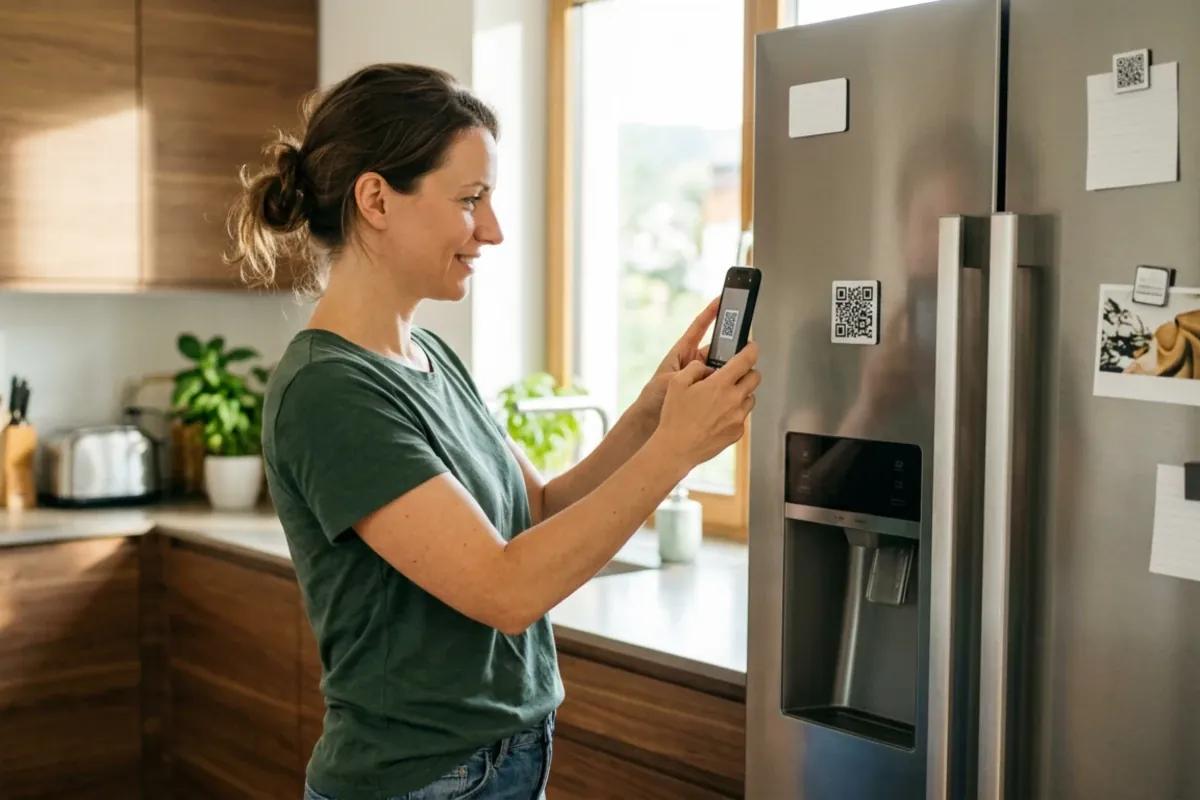
A homeowner keeps your plumbing company’s magnet on the refrigerator for eight months. One morning, the water heater leaks. They scan the magnet, visit your emergency service page, and request help.
That magnet did its job. But would you know?
For many small businesses, printed marketing disappears into a reporting blind spot. You can count how many flyers you distributed or what a vehicle wrap cost. Connecting those expenses to website visits and bookings is harder.
Pairing QR codes with UTM-tagged links gives you a practical way to close that gap. Each printed placement gets an identifiable link, so you can see which materials bring people to your website and what those visitors do next.
You don’t need a complicated system. You need consistent labels, a useful destination page, and website tracking that records the actions you care about.
What QR Codes and UTM Links Actually Track
A QR code is a scannable way to open a destination, usually a web address. By itself, a basic QR code doesn’t tell your website analytics whether someone found it on a truck, a flyer, or an invoice.
UTM parameters supply that context. They are labels added to the end of a URL. When someone opens a tagged link, a compatible analytics tool can read those labels and associate them with the visit.
Imagine two QR codes pointing to the same plumbing service page. One appears on a van wrap; the other appears on a fridge magnet. Without distinct tracking labels, those visits may look alike. With UTM tracking, you can separate them.
There is an important distinction here: a scan is not automatically a website visit. Someone might scan a code but never load the page. Some QR services count redirect requests, which may also include automated activity. Website analytics measures something different and can miss visits because of consent choices or blocking.
Treat QR scan counts as one signal. Visits, qualified inquiries, and bookings tell you more about business results.
Give Every Printed Placement a Recognizable Identity
Three UTM fields are especially useful for offline marketing.
Use utm_source to identify the placement
The source tells you where the visitor encountered the link. For a small business, clear values such as van_wrap, fridge_magnet, door_hanger, or printed_invoice are easy to understand later.
There are other valid naming systems. What matters is choosing one and sticking with it. If you call a placement fridge_magnet this month and magnet next month, your reports will split the results.
Use utm_medium to group the channel
The medium describes the broader delivery method. You might use qr_print for QR codes on physical materials.
Keep this value consistent across placements when you want to compare them as one channel. Each piece needs its own identifiable combination of tags, not necessarily a different value in every field.
Custom mediums such as qr_print may appear as “Unassigned” in default analytics channel reports. That doesn’t mean tracking failed. You can still inspect source and medium directly or configure a custom channel group.
Use utm_content to distinguish the version
The content field separates individual designs, locations, or messages. A plumber might use van_02_rear_emergency for one vehicle’s rear panel and magnet_water_heater_v1 for a magnet.
You can also add utm_campaign to connect related materials under an initiative such as water_heater_awareness.
For example, a tagged destination path could look like this:
/water-heater-repair?utm_source=fridge_magnet&utm_medium=qr_print&utm_campaign=water_heater_awareness&utm_content=magnet_v1
Use lowercase letters and a consistent separator, such as underscores. Keep a shared spreadsheet with each placement, its tags, destination, print date, and QR file. Never put customer names, addresses, or other personal information in UTM values.
Start With the Page, Then Build the Link
Before creating a code, decide what someone should accomplish after scanning it.
A homepage often makes visitors work too hard. Someone scanning an emergency plumbing magnet probably wants repair availability and a clear way to request service. They shouldn’t have to navigate past remodeling projects and company history.
Choose a relevant, mobile-friendly landing page with a clear next step. Match its message to the printed piece, and make sure any advertised terms are easy to find.
Next, create the tagged destination using a free UTM link builder. Enter the page address and your tracking labels, then check the generated URL for spelling mistakes.
Only after the tagged link is correct should you turn it into a QR code. A QR generator won’t fix missing or inconsistent campaign labels. It simply encodes the address you give it.
A Plumber’s Van Wrap and Fridge Magnet Need Separate Codes
A plumber’s van and fridge magnet reach people in very different situations.
The van may introduce the business to someone who has never heard of it. The magnet may stay in a customer’s home for years. Using the same QR code on both sacrifices a useful comparison.
For the van, the plumber could use utm_source=van_wrap, utm_medium=qr_print, and utm_content=van_02_rear_panel. The destination might be a local plumbing service page with a quote request.
The magnet could use utm_source=fridge_magnet, the same medium, and utm_content=water_heater_magnet_v1. Its destination might focus on water heater repairs if that is the magnet’s message.
Placement matters as much as tagging. A code on a parked van must be large enough to scan at the expected distance, with strong contrast and clear space around it. Don’t encourage drivers to scan a moving vehicle. Design for someone standing safely nearby.
The magnet needs a readable backup address because scanning isn’t everyone’s preference. Keep its destination available long after the first batch is distributed.
HVAC Door Hangers Can Reveal Neighborhood Differences
Suppose an HVAC company distributes door hangers in a new subdivision. The message invites homeowners to schedule a system check.
A useful setup would use utm_source=door_hanger, utm_medium=qr_print, and utm_content=oak_meadows_phase_1. A second distribution area could use oak_meadows_phase_2.
Now the business can compare responses by distribution area without asking every caller where they found the company.
The landing page should explain what the system check includes, who it is intended for, and how to request an appointment. It should avoid assumptions about the home’s equipment or warranty coverage.
Tracking also creates an opportunity to test the message. One batch might emphasize comfort problems; another might emphasize preventive maintenance. Give each version a distinct content label.
Change one major element at a time when possible. If the neighborhood, design, offer, and distribution date all change together, it becomes difficult to explain why one batch performed better.
Electrician Yard Signs and Invoices Serve Different Moments
An electrician’s yard sign can reach neighbors while work is underway. A printed invoice reaches someone who already knows the business.
Those audiences deserve separate tracking and different destinations.
A yard sign might use utm_source=yard_sign, utm_medium=qr_print, and utm_content=panel_upgrade_design_a. Its QR code could open a page about electrical panel upgrades and estimate requests.
An invoice might use utm_source=printed_invoice and utm_content=ev_charger_followup_v1, with the same print medium. If the invoice invites customers to explore EV charger installation, the code should lead directly to that service page.
Track these campaigns separately. An existing customer may be more comfortable booking than a neighbor seeing the business for the first time.
As with a vehicle wrap, a yard sign needs a safe scanning location. A code that can only be read from a passing car is a poor design choice, regardless of how good the tracking is.
Spa Gift-Card Inserts and Table Tents Need Clear Next Steps
A spa can use QR code tracking to understand both gift redemption activity and interest at the front desk.
A gift-card insert could use utm_source=gift_card_insert, utm_medium=qr_print, and utm_content=redemption_instructions_v1. The destination should explain how to book with a gift card, including any steps required before arrival.
A front-desk table tent could use utm_source=front_desk_table_tent and utm_content=massage_rebooking_v1. That code might open the relevant booking page.
Avoid one generic “Scan here” message everywhere. “Scan for gift-card booking instructions” sets a much clearer expectation.
Keep the tags about the material, not the person. Never include a gift-card number, customer name, or treatment history in the tracking URL.
Keep Printed Links Short Without Losing Tracking
UTM-tagged URLs can get long. Printing the full address beneath a QR code makes the design harder to read and gives people an unpleasant typing task.
A short, business-controlled address can redirect to the longer tagged destination. For example, a readable path such as /magnet can forward visitors to the service page with the magnet’s UTM parameters attached.
This gives you a practical backup for people who prefer typing. It can also make the encoded QR destination shorter and less dense.
Check that redirects preserve the tags. A redirect that strips the query string can erase your attribution.
Dynamic QR services provide another option: the printed code opens a managed redirect whose destination you can change. That is convenient, but check fees, expiration rules, and what happens if you stop paying. A magnet may outlast a software subscription.
For long-lived materials, control over the redirect is worth serious consideration.
Test the Printed Experience Before Ordering
A QR code that scans on your monitor may fail on a glossy, curved, or poorly lit surface.
Print a proof at the intended size. Test it with more than one phone, using normal camera apps, at realistic distances and angles. Check that the code has strong contrast and an unobstructed blank border.
Then follow the entire journey. Confirm that the correct page opens, the tags survive any redirects, and the page works well on mobile data. Submit a test inquiry or complete a test booking where practical.
Also verify that the visit and completion appear in your analytics. Real-time or debugging tools can help, though regular reports may take time to update.
Test the actual exported artwork. Resizing, cropping, and last-minute design changes can damage a code that worked perfectly earlier.
Measure What Happens After the Visit
UTM labels identify traffic. They don’t automatically record quote requests or appointments.
Configure your analytics to capture meaningful actions, such as successful form submissions and confirmed bookings. A click on a phone number can be useful, but it is not proof that a call connected or became a customer.
External booking platforms require special attention. You may need cross-domain measurement or an integration to connect the original visit to a completed appointment. A booking-button click alone isn’t a confirmed booking.
In Google Analytics 4, source and medium are available in acquisition reporting. Content-level comparisons may require a customized report or exploration using the relevant manual ad content dimension.
Compare results with distribution volume and cost, not just raw totals. If 500 magnets produce five qualified inquiries while 5,000 flyers produce ten, the flyers generated more inquiries but fewer per distributed piece.
Even good tracking has limits. Someone may scan today and book later on another device. Someone else may read the printed phone number and never scan. QR results measure the trackable response, not every effect of the material.
Make the Next Print Run More Informative
Start with two placements you already use. Give each a clear tracking identity, send visitors to a relevant page, and verify the full journey before printing.
Then give the materials time. A door hanger may generate a quick response; a fridge magnet may sit quietly until a pipe leaks months later.
The useful question is whether a printed piece helped someone take a worthwhile next step, at a cost your business can support. Consistent UTM tracking and well-tested QR codes make that question much easier to answer.

