8 Outbound Marketing Strategies To Boost Your Sales
- What outbound marketing actually does well
- Outbound vs. inbound, without the fake rivalry
- 1. Direct and cold email still works, if it feels like it was written by a person
- 2. Video ads can explain a lot in very little time
- 3. Boosted social posts are a low-friction way to expand reach
- 4. Personalization is not a bonus tactic, it is the difference between waste and relevance
- 5. Cold calling still works when it sounds like a conversation, not a performance
- 6. Email newsletters are outbound’s quieter, steadier cousin
- 7. Print ads still have a place, especially in local and niche markets
- 8. TV and radio can create fast familiarity when used carefully
- How to make outbound work without burning budget
- The bottom line
Outbound marketing gets dismissed too easily.
A lot of small business owners hear “outbound” and think spam, interruption, or old-school tactics that stopped working years ago. I get the reaction. Nobody wants to waste money on messages people ignore. But that view misses something important: outbound marketing is still one of the fastest ways to get in front of new prospects, especially when you need results sooner rather than later.
Inbound marketing has obvious strengths. Helpful blog posts, search traffic, social content, and email nurture sequences can build trust over time. The problem is time. Inbound often works slowly. If you need more awareness this month, more leads this quarter, or more sales conversations next week, waiting for people to find you is not always enough.
That is where outbound comes in.
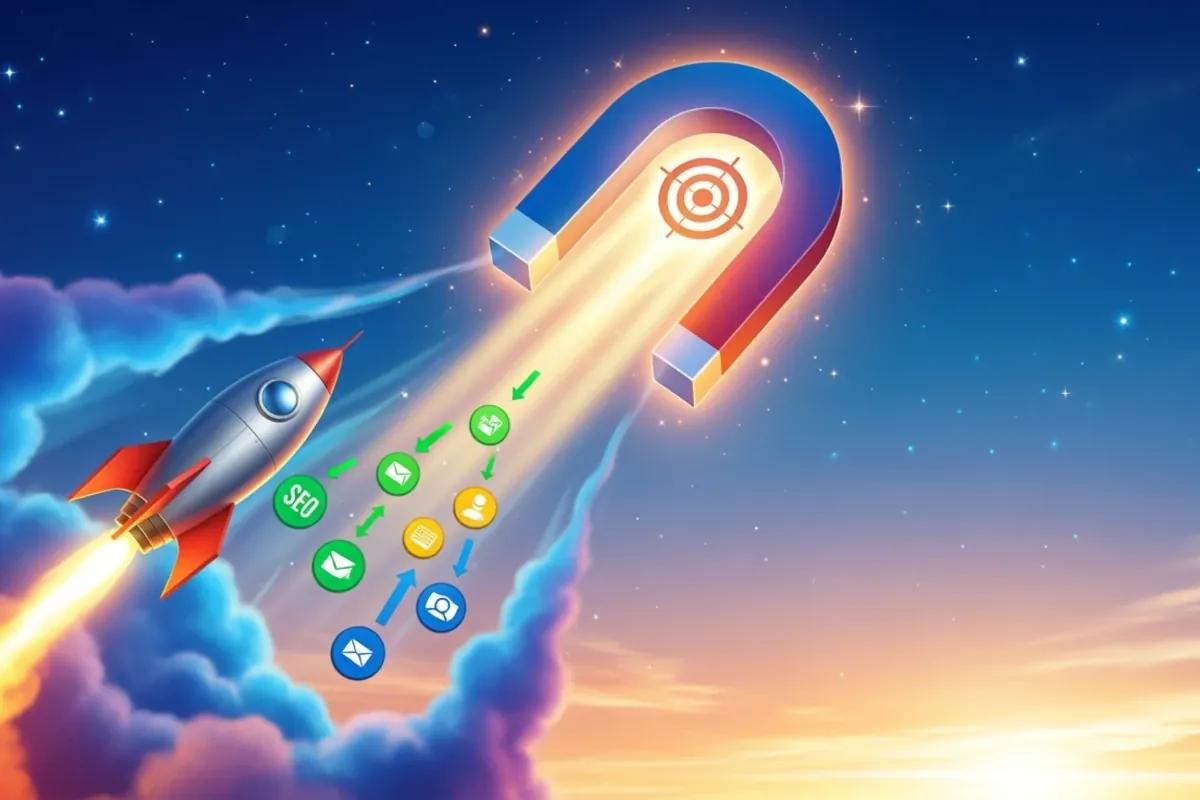
Outbound marketing is the practice of reaching out first. Instead of waiting for someone to search, subscribe, or stumble across your business, you put your message directly in front of them through channels like cold email, paid social, video ads, phone calls, print ads, TV, or radio. Done badly, it feels random and annoying. Done well, it feels timely, relevant, and surprisingly efficient.
The real win is not choosing outbound instead of inbound. It is using both. Outbound creates attention quickly. Inbound helps convert that attention into trust, loyalty, and repeat business.
What outbound marketing actually does well
Outbound marketing is useful because it solves a simple problem: plenty of good prospects are not actively looking for you yet.
A local service business, a B2B consultant, an ecommerce shop, or a niche software company can all have strong offers and still remain invisible to people who would genuinely buy. Outbound gives you a way to close that gap. It helps you reach people before they type anything into a search bar.
It also tends to be easier to launch than people expect. You can start with a modest budget, test a few messages, and learn quickly. You do not need a huge audience first. You do not need months of SEO traction. You need a clear offer, a defined audience, and a way to track what happens next.
That speed matters. Outbound is often the quickest route to measurable awareness, fresh leads, and early sales data. For a small business, that feedback loop is valuable. You learn what gets attention, what objections show up, and what people actually respond to.
Outbound vs. inbound, without the fake rivalry
The internet loves false choices. Outbound versus inbound is one of them.
Inbound marketing attracts people with useful content, educational resources, organic search, and social engagement. It usually feels less intrusive because the prospect chooses to engage. That makes it strong for trust-building and long-term growth.
Outbound marketing is more direct. You start the conversation. You place the ad, send the email, make the call, or put the offer in front of a targeted audience. That makes it strong for speed, reach, and awareness.
If I had to simplify it, I’d say outbound is the engine that starts motion, while inbound is what keeps the relationship going. One gets you noticed. The other helps people stick around.
For small business owners, the best approach is rarely pure inbound or pure outbound. A smarter setup looks like this: outbound campaigns drive people to your website, landing page, social profile, or email signup, and your inbound assets do the patient work afterward. Your content creation process matters here because once outbound gets attention, your follow-up content needs to be good enough to hold it.
1. Direct and cold email still works, if it feels like it was written by a person
Cold email has survived every prediction of its death. There is a reason for that. Email is cheap to test, easy to personalize, and still one of the most direct ways to reach decision-makers.
The mistake is sending generic messages to giant lists and calling it strategy. That is where cold email becomes background noise.
A stronger approach starts with segmentation. Separate prospects by industry, business size, role, pain point, or buying stage. Then write to that specific group. A restaurant owner and a real estate broker do not need the same message. Neither does a first-time buyer and a repeat customer.
Personalization does not need to be creepy or overly elaborate. Usually, it just means showing that you understand the recipient’s context. Mention a relevant problem. Reference a likely goal. Keep the message short. Make the next step easy.
Subject lines matter, but clarity matters more. If the email sounds like a trick, many people will skip it. If it sounds useful and direct, response rates improve. Some teams use AI marketing tools to draft variations or test subject lines faster, which can save time, but the final message still needs a human tone.
A response rate around 4 to 5 percent can be meaningful when the targeting is strong and the offer is relevant. You do not need everyone to reply. You need the right few.
2. Video ads can explain a lot in very little time
Video ads are one of the fastest ways to create awareness because people process visual information quickly. A strong video can introduce a problem, present a solution, and create curiosity in under 30 seconds.
That sounds simple. It is not always easy.
The hard part is discipline. Many businesses try to cram too much into one ad. Too many features. Too much backstory. Too many claims. Good outbound video is tighter than that. It grabs attention early, gets to the point fast, and leaves the viewer with one clear idea.
Platforms like YouTube make video advertising accessible even for smaller budgets. You can test skippable ads, short-form placements, or remarketing campaigns aimed at people who already visited your site. The format matters less than the message. If the opening five seconds are weak, the rest barely matters.
This is also a place where small business tools can help. Scripting, editing, captioning, and creative testing all take time, and a lean team usually has too many tasks already. Anything that speeds up production without making the ad feel robotic is worth considering.
Watch view-through rates, click-through rates, and conversions. A video with lots of views but no action may be entertaining, but it is not helping sales.
3. Boosted social posts are a low-friction way to expand reach
Boosting social posts is often dismissed as basic. I think that is unfair. For many small businesses, it is one of the easiest outbound entry points because it builds on content you already know people engage with.
The best boosted post is usually not the flashiest one. It is the organic post that already got decent attention on its own. That early engagement is a clue. It tells you the topic, angle, or offer already connects with your audience.
When you put money behind it, targeting becomes the real advantage. You can narrow by age, interests, location, job role, or lookalike audiences that resemble existing customers. That keeps your spend more focused than broad awareness campaigns.
A boosted post should have a clear next step. Visit a landing page. Book a call. Download a guide. Claim an offer. “Engagement” by itself is not enough unless awareness is your only goal.
This is also where inbound and outbound work nicely together. Your outbound spend gets the post in front of new people, and your organic social presence helps validate your business once they click through and start looking around.
4. Personalization is not a bonus tactic, it is the difference between waste and relevance
Personalization deserves its own place because it improves almost every outbound channel.
People are flooded with messages. Most of them get ignored for a simple reason: they feel generic. A message that speaks to a person’s actual situation has a much better chance of getting a response.
That does not mean every campaign needs deep one-to-one customization. Often, the biggest gains come from segment-level personalization. One version of a message for first-time buyers. Another for repeat customers. One offer for local prospects. Another for regional partners. One email for businesses with an outdated website. Another for businesses already running ads but not converting well.
Behavioral data helps too. If someone clicked a pricing page, watched a product video, or engaged with a certain topic, that behavior can shape the next message they receive.
This is one area where AI marketing can save a real amount of time. Drafting message variations, rewriting ad copy for different audiences, or adapting a newsletter by segment can move much faster with the right workflow. Some teams rely on a Smart Editor to sharpen subject lines or trim copy that rambles. Others use a drafting assistant, something in the spirit of a Craft Buddy, to get a rough version out faster. That part is practical. Just do not confuse speed with quality. The final test is whether the message feels relevant to the person reading it.
5. Cold calling still works when it sounds like a conversation, not a performance
Cold calling makes people uncomfortable. Honestly, that is part of why it still works. Many businesses avoid it, which means a thoughtful caller can stand out.
The issue is not the channel. It is the execution.
Bad cold calls are scripted in the worst possible way. They trap the caller in a rigid pitch and trap the prospect in immediate defensiveness. Good cold calls sound structured but natural. They respect time, get to the point quickly, and focus on qualification rather than persuasion.
A useful opening does not need drama. It needs clarity. Why are you calling? Why might this be relevant? Is now a bad time? That kind of straightforward approach tends to work better than manufactured enthusiasm.
Cold calling also improves when it is not isolated. Pair it with email. A prospect might ignore an email but respond to a call because they have already seen your name. Or they might skip the call and reply later to the follow-up email because the call made the message familiar. Multi-touch outreach usually beats one-shot outreach.
For service businesses, this can be especially effective in local or niche markets where relationships still matter and decisions are often made by a small number of people.
6. Email newsletters are outbound’s quieter, steadier cousin
Newsletters are not always grouped with outbound marketing, but they should be when they are used proactively to keep prospects engaged and moving toward a sale.
The value of a newsletter is consistency. It keeps your business visible without requiring a hard pitch every time. Product updates, useful tips, case examples, limited offers, and relevant news can all keep interest warm.
The mistake is sending newsletters that read like company announcements nobody asked for. A useful newsletter gives the reader something. Maybe it saves time. Maybe it helps them make a decision. Maybe it shows them a better option than the one they are using now.
Clean design helps, but content matters more. If the writing is muddy or self-important, people stop opening. This is where disciplined content creation pays off. You do not need to sound brilliant. You need to sound clear.
Cadence matters too. Too frequent, and fatigue sets in. Too rare, and people forget who you are. The right schedule depends on your audience, but consistency is usually more important than frequency. Weekly, biweekly, or monthly can all work if the content stays useful.
7. Print ads still have a place, especially in local and niche markets
Print ads are easy to underestimate because digital channels feel more measurable and more current. But print still works in the right context.
Some audiences trust physical media more than digital noise. Some industries still rely heavily on trade publications, local magazines, newspapers, event programs, or direct mail. For certain demographics, print is familiar in a good way. It feels more deliberate and less disposable.
That said, print should not be treated like a guessing game. If you run a print ad, build in a way to track response. Use a dedicated landing page, a custom promo code, a unique phone number, or a memorable URL. Without that, it becomes hard to know whether the ad moved anything.
Creative matters here too. Print gives you a few seconds of attention at best. One strong message beats a crowded layout trying to say everything. I think a lot of print ads fail because they try to prove credibility, explain the service, tell the brand story, and close the sale all at once. That is too much for one page.
8. TV and radio can create fast familiarity when used carefully
TV and radio sound expensive, and sometimes they are. But they are not automatically out of reach, especially for businesses targeting a specific region or a niche audience.
Their biggest advantage is repeated exposure. People may not act the first time they hear or see your ad. That is normal. But repetition builds familiarity, and familiarity often lowers resistance later when they encounter your business elsewhere.
Radio can work well when your audience has predictable listening habits, such as commuters, local sports fans, or specific age groups. TV, including connected TV and regional placements, can help businesses gain broad recognition quickly if the message is simple and memorable.
The trap is thinking reach alone is enough. It is not. If your ad does not give people a clear reason to remember you or a simple next step to take, frequency just means they hear an unclear message more often.
These channels usually work best when they are part of a wider campaign. Someone hears the radio ad, later sees a paid social post, then clicks through to your site and signs up for emails. That sequence is hard to capture with single-channel thinking, but it is how real buying behavior often happens.
How to make outbound work without burning budget
The strongest outbound campaigns tend to share a few habits.
First, they combine channels instead of betting everything on one. A cold email can support a call. A video ad can warm up a prospect before a sales conversation. A print ad can push people toward a landing page where your inbound content does the heavier explanation.
Second, they segment early. Broad targeting makes it easier to launch and easier to waste money. Tight targeting usually creates better messages and better results.
Third, they test constantly. Change the subject line. Try a different call-to-action. Swap the first sentence of the script. Use two landing page versions. Outbound gives quick feedback if you are willing to look at it honestly.
Fourth, they track what happens after the click or call. UTM codes, promo codes, dedicated pages, CRM notes, and basic attribution systems matter more than most businesses think. If you cannot trace where leads came from, it becomes hard to improve anything.
Finally, they remember that immediate sales are not the only outcome worth measuring. Some outbound campaigns create awareness first and revenue later. That is frustrating if you want instant proof, but it is still valuable. The right question is not “Did every ad close a sale today?” It is “Did this campaign move the right audience closer to buying, and can we see that movement?”
The bottom line
Outbound marketing is still one of the quickest ways to create awareness, generate leads, and open sales conversations. It works because it does not wait for prospects to find you. It goes to them first.
That does not mean every outbound tactic fits every business. The best mix depends on your audience, budget, sales cycle, and goals. Cold email may work brilliantly for one company and do almost nothing for another. Print may seem old-fashioned until it reaches exactly the people digital missed. Cold calling may feel awkward until it books real meetings.
If you run a small business, the smartest move is usually to start narrow, measure carefully, and improve one campaign at a time. Use outbound to create momentum. Use inbound to capture and nurture the attention you earn. Together, they do a better job than either one alone.

